Why Molecular Weight Isn't a Whole Number: Isotopes Explained
Understand why atomic and molecular weights are decimal numbers through natural isotopic abundance and weighted average mass calculations.
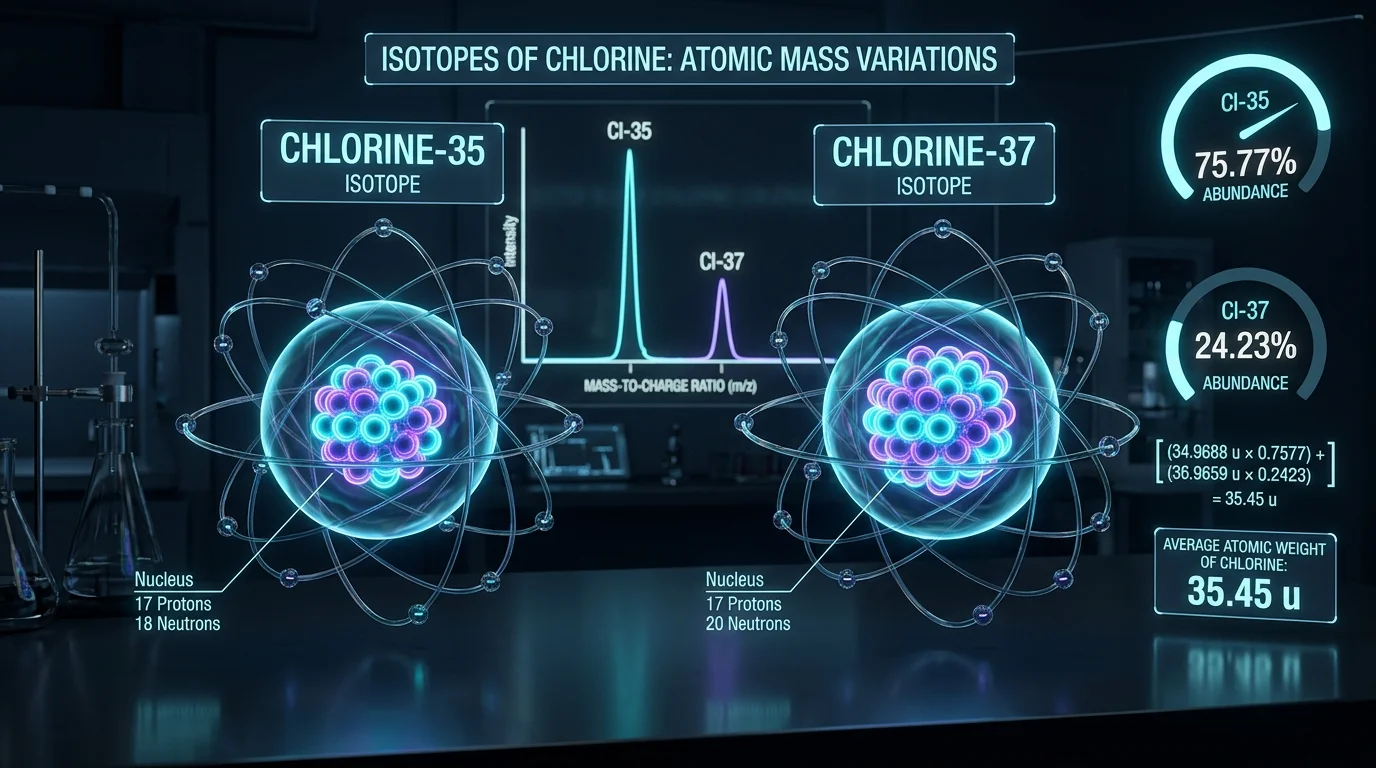
Ever notice that atomic mass values on the periodic table are rarely clean whole numbers? That’s not a rounding quirk—it’s a direct result of isotopes. This article explains why molecular weight carries decimals and what’s really happening at the atomic level.
Why Atomic Masses on the Periodic Table Are Usually Decimal Values
Periodic table atomic masses represent a weighted average of every naturally occurring isotope of an element, not the mass of a single atom. Chlorine, for instance, shows up as roughly 35.45, even though no single chlorine atom actually has that mass.
This average reflects natural abundance, blending the masses of different isotopes based on how common each one is in nature.
What Are Isotopes and How Do They Differ?
Isotopes are atoms of the same element with different numbers of neutrons. They share the same atomic number but differ in mass number. Carbon-12 and carbon-13 are both carbon, but carbon-13 carries one extra neutron, making it slightly heavier.
This variation is the root cause behind decimal atomic weights, since the periodic table can’t show one single isotope’s mass and still represent the element accurately.
How Isotopic Abundance Influences Average Atomic Mass
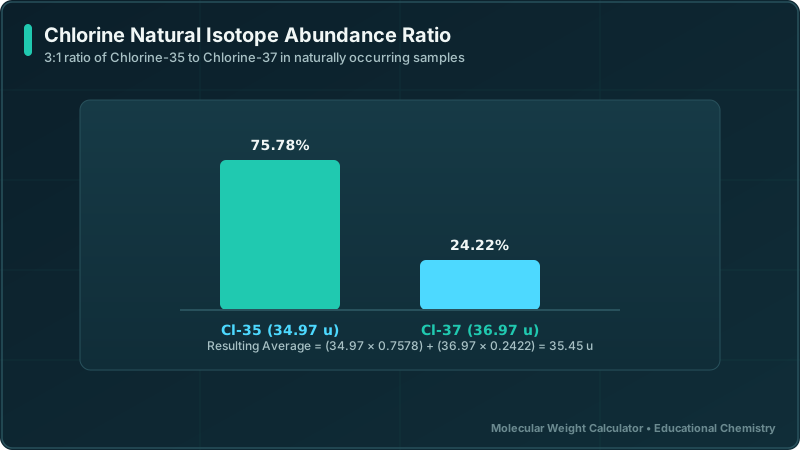
Isotope abundance percentage determines how much each isotope contributes to the final average. Chlorine-35 makes up about 76 percent of natural chlorine, while chlorine-37 makes up the rest. This uneven split is why chlorine’s average sits closer to 35 than to 36.
Elements with isotopes closer in abundance produce averages that fall more toward the middle of their possible mass values.
How Scientists Calculate Weighted Average Atomic Mass
The weighted average formula multiplies each isotope’s mass by its natural abundance, then adds the results together. For chlorine: (34.97 x 0.76) plus (36.97 x 0.24) gives approximately 35.45.
| Isotope | Mass | Abundance | Contribution |
|---|---|---|---|
| Cl-35 | 34.97 | 76% | 26.58 |
| Cl-37 | 36.97 | 24% | 8.87 |
This method produces the standard atomic weight used in every molecular weight calculation.
Why Individual Isotopes Have Different Masses
Each extra neutron in an isotope adds roughly one unit to its mass, since neutrons and protons weigh nearly the same. Electrons contribute so little mass that they’re essentially ignored in these calculations.
This is why isotope mass values climb steadily as neutron count increases, even though the element’s chemical identity stays the same.
How Isotopes Affect the Molecular Mass of Compounds
When you calculate a compound’s molecular mass, you’re technically using the average atomic mass of each element, which already accounts for isotope distribution. This means the molecular mass you calculate is itself an average, not an exact value for any single molecule.
Real molecules can and do vary slightly in mass depending on which isotopes happen to make them up.
What Is the Difference Between Mass Number and Atomic Mass?
Mass number is a whole number representing the total protons and neutrons in one specific atom. Atomic weight, by contrast, is the decimal average across all naturally occurring isotopes. Confusing the two is a common chemistry terms mistake among students.
Remembering that mass number applies to a single atom, while atomic weight applies to the element overall, clears up most confusion.
How Mass Spectrometry Measures Isotopic Patterns
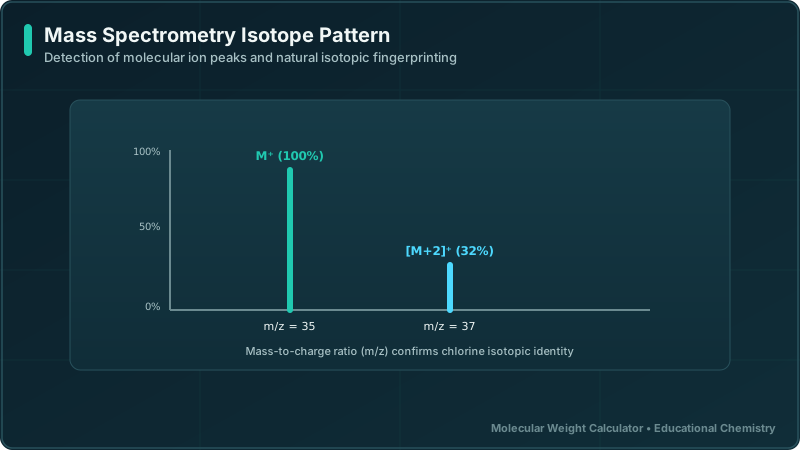
Mass spectrometry separates and detects individual isotopes based on their mass-to-charge ratio, producing an isotope pattern that scientists use to confirm compound identity. This isotope analysis technique is central to modern analytical chemistry.
The resulting mass spectrum shows peaks corresponding to different isotopic combinations within a molecule.
Why Molecular Mass Can Change With Isotopic Composition
Samples enriched with heavier isotopes, sometimes used in isotope tracing experiments, will have a slightly higher molecular mass than a typical natural sample. This shift is measurable and forms the basis of many research techniques in nuclear chemistry and biology.
Conclusion: Understanding Decimal Atomic and Molecular Masses
Decimal atomic mass values exist because elements occur as a mix of isotopes, each contributing according to its natural abundance. Understanding this weighted average clears up why molecular weight figures are rarely round numbers, and it deepens your grasp of atomic structure overall.