Molecular Weight of Common Chemicals: Complete Table
Comprehensive reference table of molecular weights and chemical formulas for common acids, bases, salts, organic compounds, and laboratory reagents.

Having quick access to molecular weight values for everyday chemicals saves significant time in the lab. This reference guide walks through how to read and use a molecular weight table effectively.
What Is Molecular Weight and How Is It Listed for Common Chemicals?
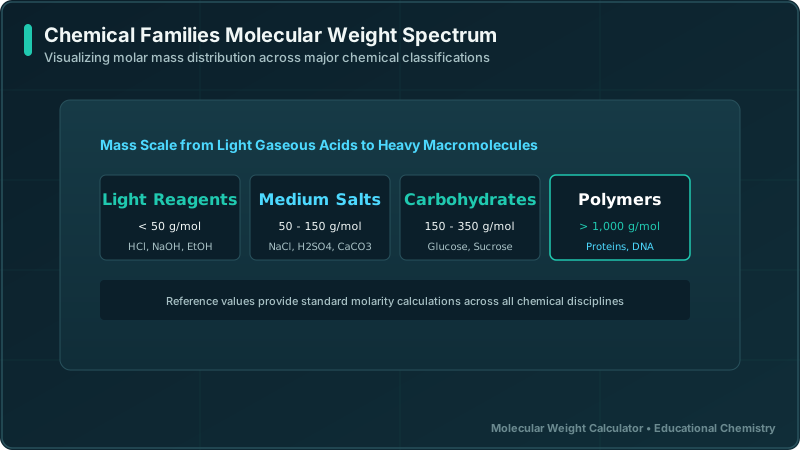
Molecular weight for common chemicals is typically listed in grams per mole, reflecting their molar mass. These reference values save you from recalculating the same chemical formula repeatedly during routine lab work.
How to Read a Molecular Weight Reference Table
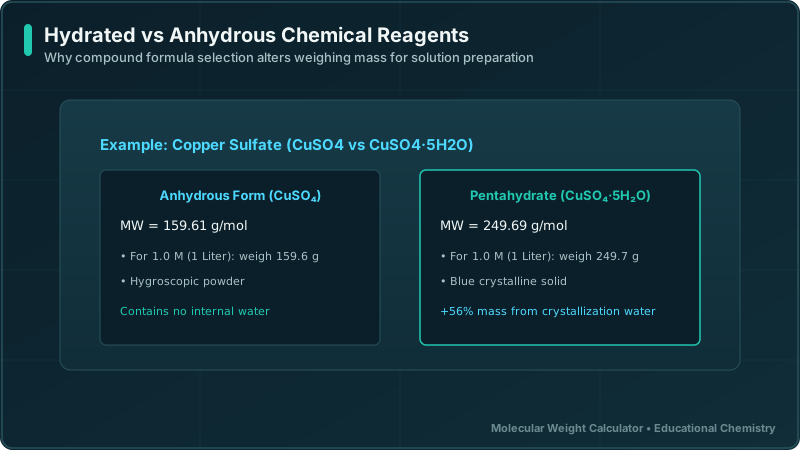
A good molecular weight reference table lists the chemical name, its formula, and its molecular weight side by side. Always confirm you’re looking at the correct form of a compound, since hydrated and anhydrous versions differ significantly.
Molecular Weights of Common Acids and Bases
| Compound | Formula | Molecular Weight (g/mol) |
|---|---|---|
| Hydrochloric acid | HCl | 36.46 |
| Sulfuric acid | H₂SO₄ | 98.08 |
| Sodium hydroxide | NaOH | 40.00 |
These acids molecular weight and bases molecular weight values are among the most frequently referenced in general chemistry.
Molecular Weights of Frequently Used Salts
| Compound | Formula | Molecular Weight (g/mol) |
|---|---|---|
| Sodium chloride | NaCl | 58.44 |
| Potassium nitrate | KNO₃ | 101.10 |
| Calcium carbonate | CaCO₃ | 100.09 |
Salts molecular weight values like these appear constantly across laboratory chemicals and everyday chemical compounds.
Molecular Weights of Common Organic Compounds
| Compound | Formula | Molecular Weight (g/mol) |
|---|---|---|
| Glucose | C₆H₁₂O₆ | 180.16 |
| Ethanol | C₂H₆O | 46.07 |
| Acetic acid | C₂H₄O₂ | 60.05 |
Organic compounds molecular weight values are essential in biology-adjacent and food chemistry applications alike.
Molecular Weights of Familiar Laboratory Chemicals
Beyond acids, bases, and salts, common laboratory reagents like sodium bicarbonate (84.01 g/mol) and calcium chloride (110.98 g/mol) also appear frequently on chemical reference sheets used in coursework and research alike.
How to Find Molecular Weight From a Chemical Formula
If a chemical isn’t on your reference table, calculate its molecular weight manually by summing atomic weights according to its formula, following the standard subscript and parentheses rules covered elsewhere in general chemistry.
Why Different Chemical Forms Can Have Different Molecular Weights
Anhydrous and hydrated forms of the same compound carry different molecular weights, since hydrates include extra water mass. Always confirm which form your reference table or lab sample represents before performing any calculation.
How to Use Molecular Weight Values in Laboratory Calculations
Reference values feed directly into solution preparation, stoichiometry, and mole calculation work. Having accurate numbers on hand speeds up routine lab tasks significantly, reducing the chance of manual calculation errors.
Conclusion: Using a Molecular Weight Reference Efficiently
A reliable molecular weight table is one of the most useful tools any chemistry student or lab professional can keep on hand. Paired with a solid understanding of how these values are calculated, it makes everyday chemistry calculations faster and more accurate.