How to Prepare a Solution of Known Molarity (Step-by-Step)
Step-by-step guide to preparing laboratory solutions of known molarity using molecular weight calculations, analytical balances, and volumetric glassware.
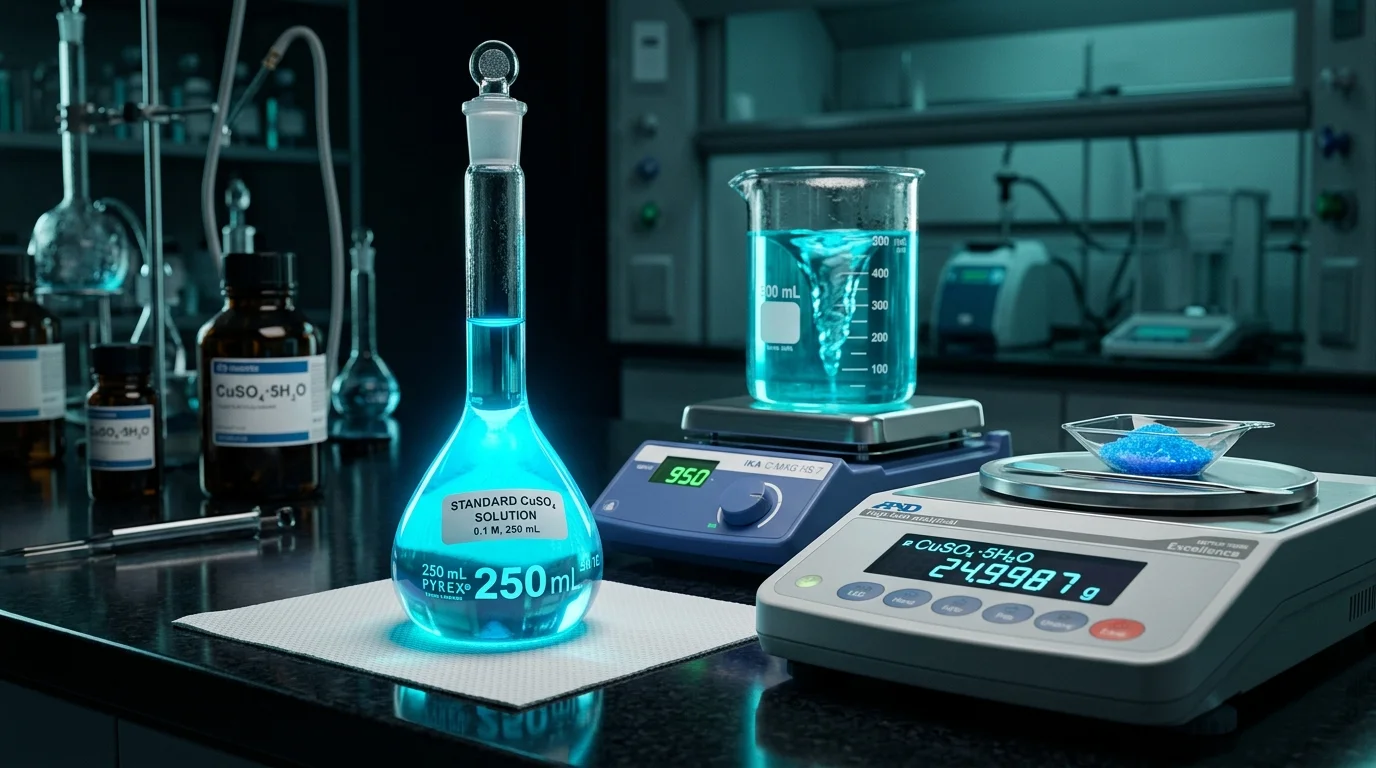
Preparing a solution with an exact molarity is one of the first hands-on skills you’ll learn in laboratory chemistry. Whether you’re making a stock solution for an experiment or a standard solution for calibration, the process always starts with molecular weight. This guide walks you through every step, from calculating moles to checking your final concentration.
What Does a Solution of Known Molarity Mean?
A molar solution has a precisely known amount of solute dissolved in a specific volume of solvent. Molarity measures moles per liter, so a 1 M solution contains exactly one mole of solute in one liter of total solution. This precision matters for reproducible chemistry experiments.
Every chemical solution you prepare in a lab depends on accurate molarity calculation. Get the math wrong, and your reaction quantities, dilutions, or titrations will all be off. That’s why understanding molecular weight before you even touch the analytical balance is essential.
How Molecular Weight Determines the Required Solute Mass
Molecular weight links the abstract concept of moles to something you can actually weigh: grams. Since molarity calculation requires a known mass of solute, and mass connects to moles through molecular weight, this number becomes your starting point for every solution preparation task.
Without an accurate molecular weight, your solute mass calculation collapses. This is especially true for hydrated salts or complex reagents, where a small error can throw off your entire solution concentration.

What Information Do You Need Before Preparing the Solution?
Before you begin, gather three things: the desired molar concentration, the target final volume, and the molecular mass of your solute. Double-check the chemical formula, since even a missing water molecule in a hydrate changes the required mass significantly.
Also confirm your laboratory glassware is clean and calibrated. A dirty volumetric flask can introduce contamination that skews your concentration accuracy, even if your math is flawless.
How to Calculate the Number of Moles Required
Start with the molarity formula: moles equal molarity multiplied by liters. If you want 0.5 liters of a 2 M solution, you need 1 mole of solute. This mole calculation step is purely arithmetic, but it sets up everything that follows.
Always double-check your units here. Confusing milliliters with liters is one of the most common molarity laboratory procedure mistakes, and it silently ruins otherwise perfect solution calculation work.
How to Convert Required Moles Into Grams
Once you know how many moles you need, multiply by the molecular weight to get the required mass. For our 1-mole example using sodium chloride (molecular weight roughly 58.5 g/mol), you’d need 58.5 grams.
| Step | Formula | Example |
|---|---|---|
| Moles needed | Molarity x Liters | 2 M x 0.5 L = 1 mol |
| Grams needed | Moles x Molecular weight | 1 mol x 58.5 g/mol = 58.5 g |
This calculated mass becomes your target on the balance.
How to Measure and Dissolve the Solute Correctly
Use an analytical balance to weigh your solute as precisely as possible. Then dissolve it in a small amount of distilled water or deionized water—never the full final volume yet. Weighing solute accurately is only half the job; proper dissolution matters just as much.
Stir gently until the solute fully disappears. Some chemical reagents dissolve slowly, so patience here prevents inaccurate readings later in the process.
How to Transfer the Solution Into a Volumetric Flask
Carefully pour your dissolved solute into the volumetric flask using the volumetric flask method. Rinse your original container with small amounts of water and add those rinses to the flask too, ensuring no solute gets left behind.
This step matters for accurate molarity. Losing even a little solute during transfer means your final concentration won’t match your calculations.
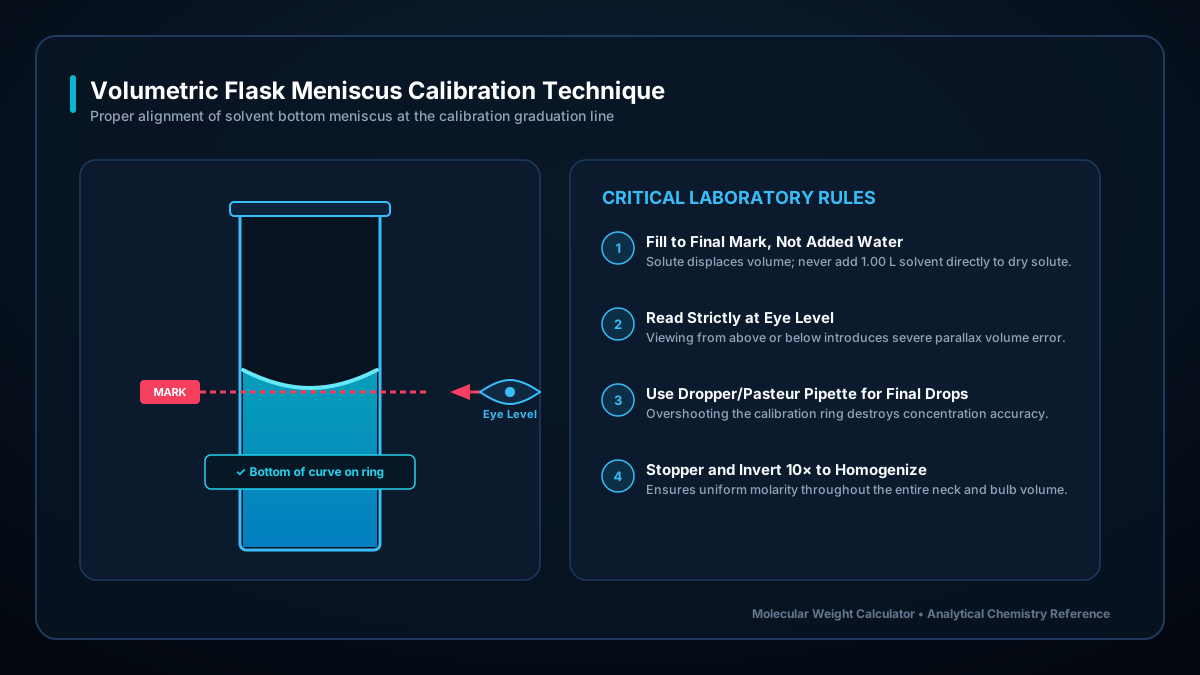
Why Final Volume Matters More Than the Initial Water Volume
Here’s a detail many beginners miss: you fill the flask to the final volume mark, not to a certain amount of added water. Since solute volume displaces some liquid, adding exactly the calculated water volume separately would overshoot your target.
Fill slowly near the calibration line, using a dropper for the last few drops. This precision is what separates a rough aqueous solution from a properly standard concentration preparation.
How to Check Whether the Prepared Concentration Is Correct
You can verify your solution concentration using titration against a known standard, or by measuring density and comparing it to reference tables. For critical work, this quantitative chemistry check catches errors before they affect your results.
If your calculated and measured concentrations don’t match, retrace your molarity calculation steps—the error is often in solute mass measurement or an overlooked dilution.
Conclusion: Preparing a Molar Solution From Molecular Weight
Preparing a molar solution comes down to four things: knowing your target molarity, calculating moles, converting to grams using molecular weight, and diluting precisely to final volume. Master these steps, and you’ll produce accurate, reliable solutions for any chemistry experiment.